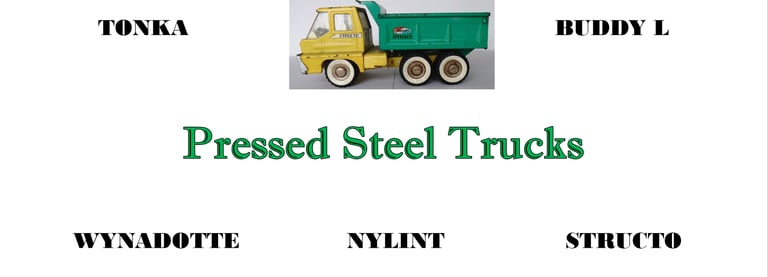

Vintage Pressed Steel Toy Trucks – Tonka, Buddy L, Wyandotte, Structo & Nylint
Collecting vintage pressed steel toy trucks is a way to hold onto a real piece of childhood and mid‑20th‑century history. Built from heavy gauge steel with bold paint and simple but charming details, these toys were made to be played with, not kept in boxes. Yet many Tonka, Buddy L, Wyandotte, Structo, and Nylint trucks from the 1940s–1970s have survived to become highly collectible. In this guide, you’ll learn why these trucks are so sought after, how to recognize key brands and eras, what affects value, and how to care for and display your collection.
Vintage pressed steel toy trucks are collectible because they combine nostalgia, durability, and design. For many people, these trucks are the exact toys they or their parents played with in the backyard, sandbox, or driveway. The weight of the steel, the simple but bold shapes, and the classic logos create an immediate emotional connection.
Unlike many modern toys, these trucks were built to last – dents, scratches, and worn paint often tell the story of decades of play. That honest wear, plus the history of the brands, makes them feel more like historical artifacts than just old toys. For collectors, each truck represents not only a specific era of manufacturing, but also a slice of everyday life from the 1940s through the 1970s.
When collecting pressed steel toy trucks from the 1940s–1970s, a handful of brands come up again and again.
Tonka
Tonka is arguably the most famous name in pressed steel. Known for their rugged dump trucks, pickups, and construction equipment, Tonka trucks from the 1950s–1970s often feature bright paint, decal logos, and heavy, functional designs. Early Tonkas and certain rare variations can be especially desirable.
Buddy L
Buddy L is another legendary brand, with roots going back to the early 20th century. Their pressed steel trucks often have a more “industrial” or realistic feel, with larger sizes and strong, simple forms. Many collectors prize Buddy L for its older, pre‑war and early postwar pieces, but there are also great examples from the 1940s–1960s.
Wyandotte
Wyandotte made a wide variety of pressed steel toys, including trucks, cars, and other vehicles. Their trucks often feature colorful paint, lithographed details, and distinctive styling. Wyandotte pieces from the 1940s and early 1950s can be especially appealing to collectors who enjoy pre‑Tonka designs.
Structo
Structo produced pressed steel trucks that often included more detailed features, such as opening parts and realistic accessories. Their vehicles can include delivery trucks, pickups, and construction pieces. Structo trucks from the 1950s–1960s are popular with collectors who like both display presence and interesting mechanical features.
Nylint
Nylint is well known for its pressed steel trucks and construction equipment, especially from the 1950s onward. Many Nylint models were based on real‑world trucks of their time, with recognizable cab designs and liveries. For collectors, Nylint offers a strong mix of realism and play value, with some models becoming quite sought after.
The period from the 1940s through the 1970s covers several important shifts in toy truck design.
1940s–early 1950s: Many trucks from this era have rounded, pre‑ and early postwar styling, simple wheels, and hand‑applied or lithographed details. Paint schemes are often basic but charming.
Mid‑1950s–1960s: This is a golden age for many collectors. Trucks become more detailed, with brighter colors, decals, and more realistic shapes, reflecting actual vehicles of the period. Construction and farm themes are especially strong.
1970s: Designs begin to shift again, sometimes incorporating more plastic parts and modern styling. While later trucks may not always be as valuable as earlier ones, they are still very collectible and often easier to find in good condition.
Understanding these eras helps you place a truck in its proper context and can guide you if you want your collection to focus on a particular decade or style.
Condition and originality are two of the biggest factors in the value of a vintage pressed steel toy truck.
Original paint vs. repaint: Trucks with original paint and decals, even if worn, are usually more desirable than repaints. Repainted trucks can look nice on a shelf but are generally worth less to serious collectors.
Rust, dents, and missing parts: Surface rust, dents, and missing pieces like wheels, grills, or beds all affect value. Light, stable rust and honest play wear can be acceptable or even appealing, while heavy rust or major damage lowers desirability.
Completeness and accessories: Trucks with their original accessories (ladders, cranes, trailers, boxes, etc.) are often worth more than incomplete examples.
Rarity and demand: Some specific models, colors, or variations are simply harder to find or more popular, which drives up their value regardless of brand.
For many collectors, the goal isn’t always “mint in box” – it’s finding trucks with the right balance of originality, condition, and personality.
How you handle cleaning and restoration can make a big difference.
Gentle cleaning first: Start with mild soap, water, and a soft cloth or sponge to remove surface dirt. Avoid harsh chemicals that can damage original paint or decals.
Respect the patina: In many cases, it’s better to leave some wear and aging rather than sanding, stripping, or fully repainting. Original patina often tells the story of the toy and keeps more collector value.
Light repairs: Tightening loose parts, straightening slightly bent metal, or replacing clearly unsafe rusted screws can improve stability without changing the truck’s character. Major restorations should be done carefully and are often best reserved for trucks that are already in poor shape.
For display:
Use sturdy shelves or enclosed display cases to protect trucks from dust and accidental damage.
Group trucks by brand, decade, or theme (construction, farm, delivery, etc.) to create a visually interesting collection.
Consider small signs or labels noting brand, approximate year, and any interesting history you know about the piece.
A great vintage pressed steel truck collection is about more than owning as many trucks as possible. The best collections tell a story – about a particular brand, era, or type of vehicle that matters to you. You might focus on 1950s Tonka dump trucks, Buddy L construction rigs, Wyandotte pre‑war‑style trucks, or a mix of Tonka, Structo, and Nylint pieces that capture the look of mid‑century America.
Start with what you love, buy the best examples you can comfortably afford, and take your time. Over the years, your shelves will become a small museum of Tonka, Buddy L, Wyandotte, Structo, and Nylint history, each truck a reminder of the eras and stories that made these pressed steel toys so special.
https://www.diecastkars.com